Looking beyond the oceanfront often opens up more options, more breathing room, and a different kind of daily lifestyle. If you love the Grand Strand but do not want to live in the middle of the beachfront pace, Conway deserves a closer look. This river city offers a blend of local character, practical convenience, and housing variety that appeals to many buyers, from first-time homeowners to retirees and out-of-state movers. Let’s dive in.
Conway offers a different Grand Strand experience
Conway sits inland on the Waccamaw River and is part of the Myrtle Beach-Conway-North Myrtle Beach metro area. It is also the county seat of Horry County, which gives it an everyday, lived-in feel that stands apart from the resort-centered beach areas.
That balance matters if you want access to the coast without making the beach your whole environment. Conway High School describes the city as a short drive from the Atlantic coast, which helps explain why many buyers see it as a practical home base within the wider Grand Strand.
The city has also been growing. Conway’s population estimate reached 30,627 in July 2025, up from 24,849 in the 2020 Census, showing steady momentum while the city still reads as a smaller, river-centered place.
Why buyers are drawn to Conway
The City of Conway’s annual financial report says new residents are often attracted by the area’s small-town charm, proximity to the ocean, lower housing costs, and low tax rates. The same city narrative notes that many newcomers are retirees from the Northeastern United States.
That does not mean Conway fits only one type of buyer. Census data shows a mixed age profile, with 16.9% of residents under 18 and 16.8% age 65 or older, which points to a community that works for a range of life stages.
For many buyers, the appeal comes down to balance. You can stay connected to the Grand Strand while living in a setting that feels more residential, more rooted, and often more flexible in terms of home style and budget.
Housing choices feel broader here
One reason Conway stands out is its housing mix. If you are searching beyond beachfront condos or tourist-area neighborhoods, Conway gives you more than one lane to explore.
The city’s transportation plan describes historic downtown Conway as covering about twenty city blocks next to the Waccamaw River. It also notes 44 locally significant structures, two historic districts, and 762 buildings built before 1955. That points to a real inventory of established streets and older homes with historic character.
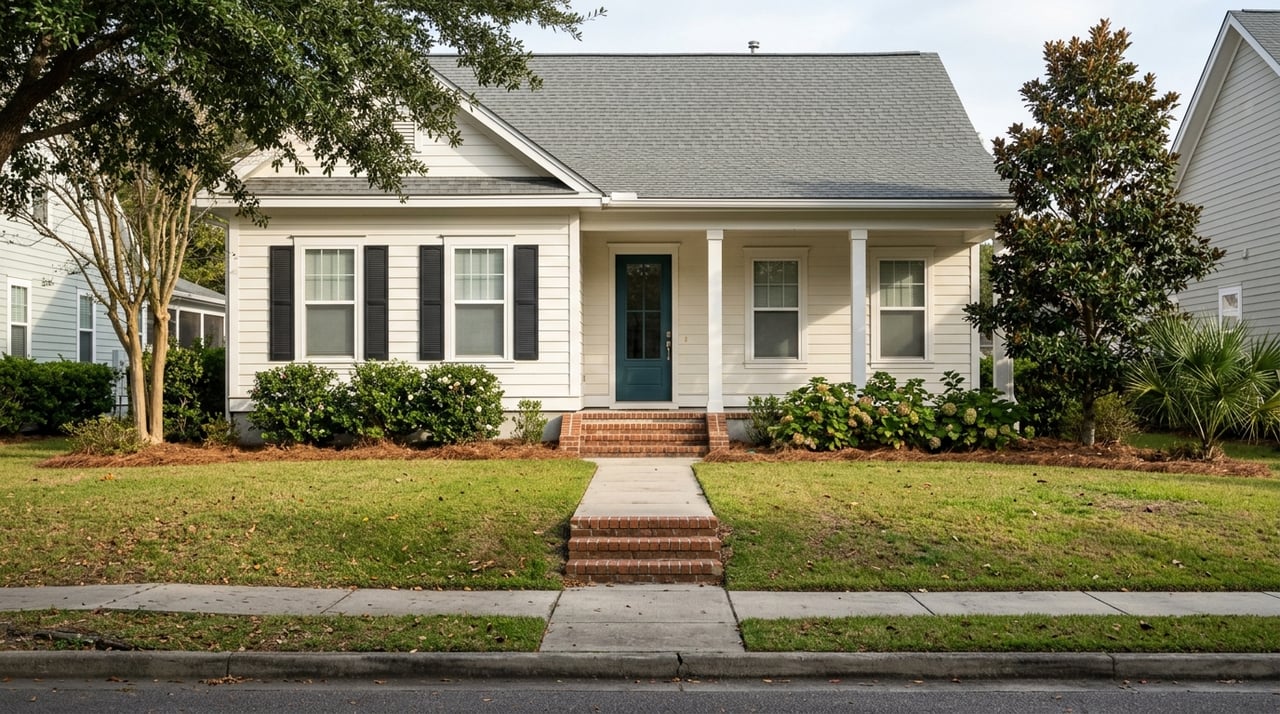
At the same time, Conway is not limited to older housing. The same city plan says post-World War II growth expanded single-family neighborhoods north of downtown, while more recent development has spread in every direction, especially south and east.
That means your search may include:
- Older in-town homes near established streets
- Traditional single-family neighborhoods developed after downtown growth
- Newer residential pockets in expanding parts of the city
- A wider mix of property types than many buyers expect at first glance
If you are relocating or buying your first home, that variety can be a real advantage. It gives you room to compare lifestyle, maintenance, commute patterns, and budget instead of feeling pushed into one narrow type of property.
Conway can make sense on price
Affordability is one of the biggest reasons buyers look inland. While every property and neighborhood is different, the available data helps show why Conway stays on many buyers’ radar.
Census QuickFacts lists a median owner-occupied home value of $260,900 and a median gross rent of $866. Those figures help position Conway as a value-conscious option for buyers who want to stay within reach of the coast.
Current market reports also show a range worth understanding. Redfin reported a median sale price of $279,733 in May 2026, while Realtor.com reported a median listing price of $317,700 based on data through April 2026. Since those figures measure different things across different time frames, it is best to use them as general context rather than direct comparisons.
For buyers, the bigger takeaway is simple: Conway often provides an entry point into the Grand Strand area that feels more attainable than many people first expect.
Buyers may have more time to decide
Speed matters in real estate, but so does having enough time to make a smart choice. In Conway, the market may give you a little more room to think.
Redfin describes Conway as not very competitive, with homes typically taking about 110 days to sell and multiple offers being rare. That can be helpful if you want to compare neighborhoods, review property condition carefully, and look closely at details like layout, lot size, and utility access.
That does not mean every home will sit or every listing is negotiable in the same way. It does mean buyers may be able to approach the process with a little more patience and a little less pressure than they expect in some coastal search areas.
Conway supports everyday living
For many people, the right place is not just about the house. It is about whether day-to-day life feels comfortable, connected, and enjoyable.
As the county seat and part of the broader metro area, Conway offers access to everyday services, schools, and government functions close to home. Census data also shows a 65.4% owner-occupied housing rate and that 79.0% of residents lived in the same house one year ago, which suggests a stable residential base.
The mean travel time to work is 24.0 minutes, according to Census QuickFacts. For buyers who want to stay connected to jobs and services around the metro without living in the middle of the beachfront activity, that practical side of Conway can be very appealing.
Outdoor life goes beyond the beach
If you picture Grand Strand living as only beach access, Conway may surprise you. The city has a strong outdoor identity built around the river and local recreation amenities.
City recreation materials highlight the Riverwalk, Conway Marina, Riverfront Tennis Center, and Crabtree Recreational Walking Trail among the city’s core amenities. The Riverwalk can be accessed from Main Street and Second Avenue or near Kingston Pointe Marina.
The marina adds even more flexibility to that lifestyle. According to city materials, it offers docking, a boat launch, canoe and kayak rentals, and riverboat tours.
The city’s recreation mapping also identifies bike routes, blueways and paddle trails, plus the Waccamaw National Wildlife Refuge as part of the local outdoor network. If you want year-round recreation without needing to live directly on the oceanfront, Conway checks more boxes than many buyers realize.
School options are part of the picture
If schools are part of your home search, Conway gives you access to Horry County Schools resources within the area. Horry County Schools says the district includes 56 schools across nine attendance areas, including Conway.
Examples tied to Conway include South Conway Elementary, Conway High School, and Early College High School on the Conway campus of Horry-Georgetown Technical College. For buyers comparing inland communities, it is helpful to know there are multiple public school options connected to the city.
Early College High School offers a distinct model. According to Horry County Schools, it allows students to combine high school with up to two years of college credit.
Flood due diligence matters in Conway
Because Conway is a river city, buyers should pay close attention to flood-zone details during their search. This is especially important if you are considering homes near the river or in lower-lying areas.
The City of Conway maintains flood-zone maps along with water and sewer utility maps. That gives buyers a practical way to verify parcel-specific information as part of normal due diligence before making an offer.
This is one of those areas where local guidance matters. A home can be appealing for its setting, but it is still important to understand flood status, insurance implications, and utility availability before moving forward.
Who tends to like Conway most
Conway can appeal to a wide range of buyers, but it tends to be especially attractive if you want Grand Strand access without a resort-corridor setting. That often includes first-time buyers, move-up buyers, retirees, and relocators looking for a calmer residential feel.
If you are moving from out of state, Conway can also be easier to picture as a full-time home base. You get proximity to the coast, but you also get a city with its own identity, historic core, local recreation, and a more everyday pace.
For many buyers, that combination is exactly the point. You are not giving up coastal access. You are choosing a different way to enjoy it.
If you are weighing Conway against other Grand Strand areas, having a local guide can help you sort through price points, home styles, flood considerations, and commute patterns with much more confidence. When you are ready for personalized help, connect with Robin Shomaker for clear advice and one-on-one guidance tailored to your move.
FAQs
How close is Conway to the beach for homebuyers?
- Conway is inland, and Conway High School describes it as a short drive from the Atlantic coast.
Does Conway have historic homes and newer neighborhoods?
- Yes. City planning documents show a historic downtown with many older buildings, along with newer development that has expanded especially south and east of downtown.
What outdoor amenities does Conway offer besides beach access?
- City recreation resources highlight the Riverwalk, Conway Marina, Riverfront Tennis Center, Crabtree Recreational Walking Trail, bike routes, paddle trails, and access to nearby refuge space.
What school options are available in Conway?
- Horry County Schools serves the area, with examples including South Conway Elementary, Conway High School, and Early College High School in Conway.
Should buyers check flood zones in Conway before buying?
- Yes. The City of Conway maintains flood-zone maps, so buyers should verify parcel-specific flood status and utility availability during due diligence.